Botox in Kalasatama – Free, no-obligation consultation
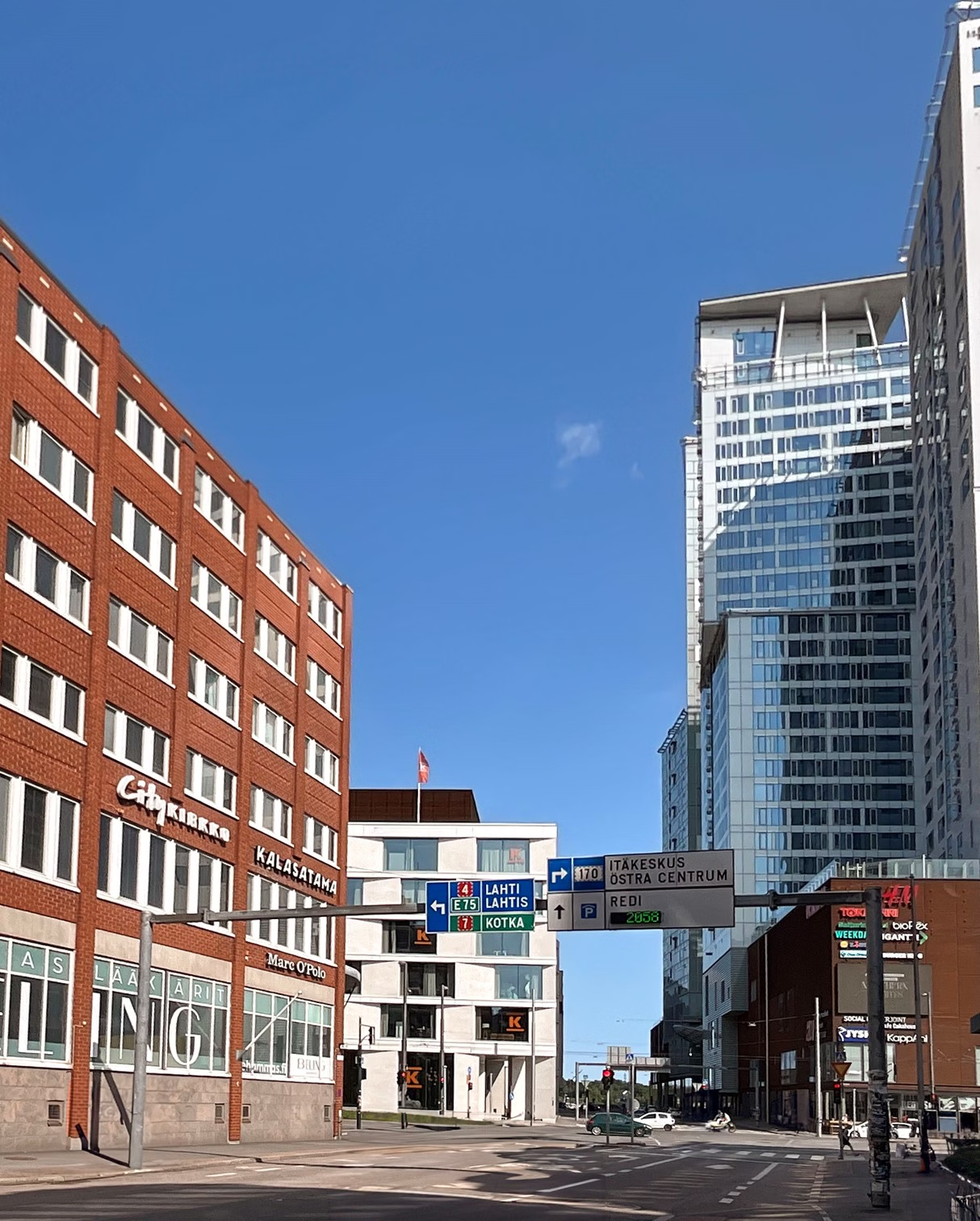

At Botox surgeon Ville Männistö's office in Kalasatama.
Botox treatment prevents and reduces expression lines.
I tailor each treatment plan individually to ensure a naturally beautiful result.

Botox, dermal fillers, and other injectable treatments
My office is located in Kalasatama, Helsinki, with excellent transport links.
ADDRESS:
Työpajankatu 10A
00580 Helsinki
The clinic is easy to reach by subway, bus, tram, or car.
Mon–Thu 8:00 a.m.–8:00 p.m.
Fri 8:00 a.m.–2:00 p.m.
Kalasatama metro station is 50 meters away, and bus 55 stops in front of the lower door.
The reception is located in Kalasatama, Helsinki, at the following address Työpajankatu 10A. The clinic is easily accessible by metro, bus, tram, or car.
The cost of Botox treatment depends on the number of areas being treated and the nature of the treatment. The exact cost will be discussed with you before the procedure. The consultation is always free of charge and non-binding. A follow-up visit, including any additional Botox injections, is also included in the total cost of the Botox treatment.
Classic aesthetic Botox treatments
One area refers to, for example, crow's feet, horizontal lines on the forehead, or crow's feet around the outer corners of the eyes. Treatment areas are planned individually and according to your wishes.
Aesthetic
special treatments
For specialized treatments, the treatment area and dosage are selected with even greater precision than usual. During your consultation, we’ll realistically discuss what can be achieved with Botox treatment.
Medical Botox treatments
Botulinum toxin treatments for bruxism, migraine, and excessive sweating in Helsinki/Tikkurila.
In medical treatments, the total cost is determined by the amount of medication used and the scope of the treatment. We always review the scope of the treatment and the total cost before performing the procedure.
Consultation, procedure, follow-up visit (with optional Botox injections)
In Helsinki and at my other locations, the price always includes a follow-up visit. During the follow-up, I assess the results of the treatment and, if necessary, administer additional Botox at no extra cost to the areas I treated during your initial appointment.
The follow-up visit is scheduled 2–4 weeks after the actual Botox treatment. I do not administer additional Botox more than four weeks after the treatment; this helps protect my patients from potential Botox resistance issues.
You can pay for Botox treatment
In addition, Resurs Bank offers an invoice and installment payment option (12 months interest-free payment period).
Botox, or botulinum toxin treatment, is an injection therapy administered with a prescription medication, in which botulinum toxin is injected into carefully selected muscles. The treatment reduces muscle activity in the treated area.
When the muscle relaxes, the skin no longer wrinkles in the same way as before. As a result, expression lines, such as forehead wrinkles and frown lines, may smooth out.
The effects are temporary and usually last about 3–6 months. Treatment is tailored to each individual based on facial anatomy and the desired outcome.
The most common areas for Botox treatments are the forehead and the glabellar lines between the eyebrows.
You can learn more about the different treatment areas here:
Botulinum toxin is used not only for aesthetic treatments but also for the treatment of certain medical conditions. At my clinic in Helsinki, I perform botulinum treatments for conditions such as muscle problems related to chewing, chronic migraines, and excessive sweating.
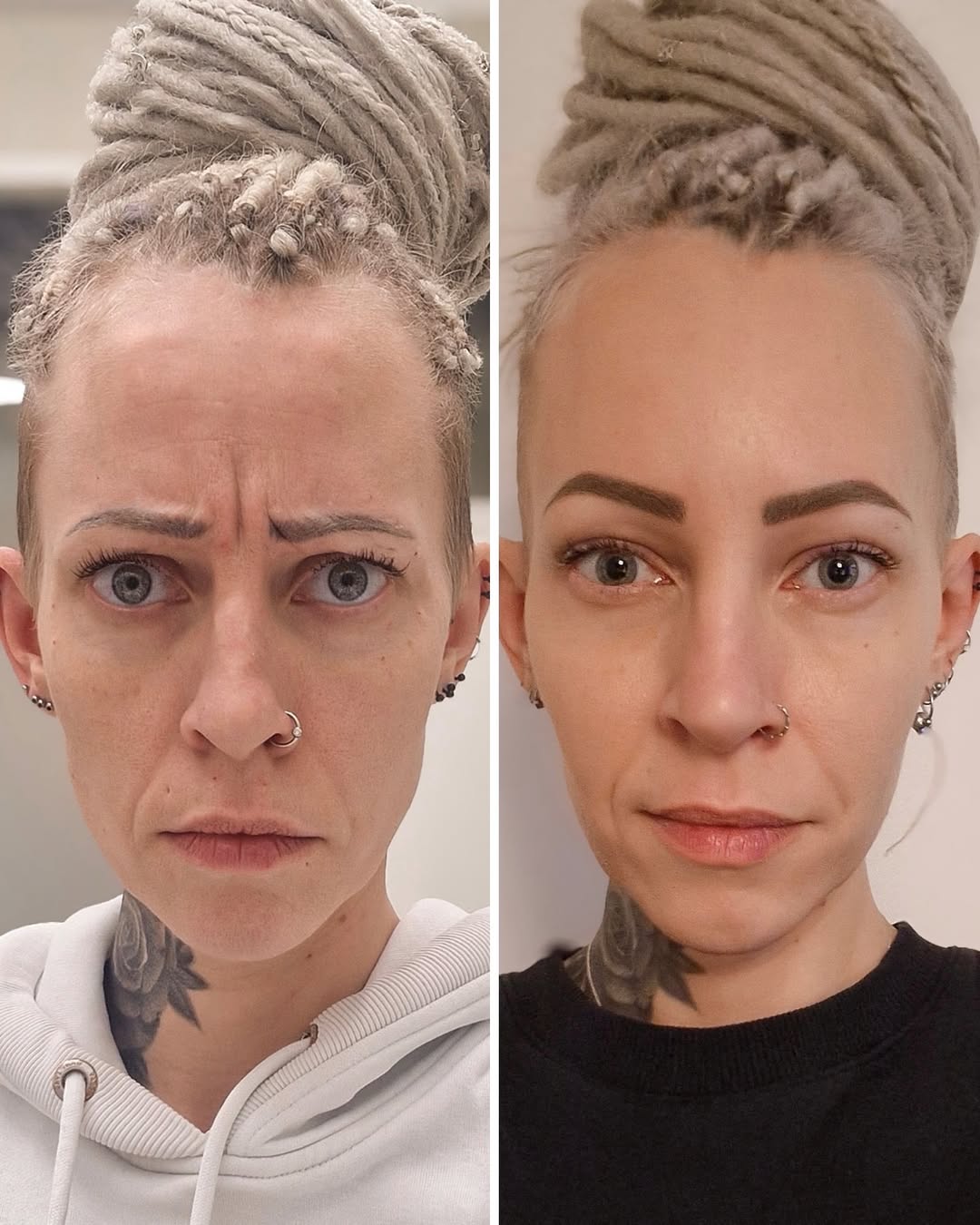
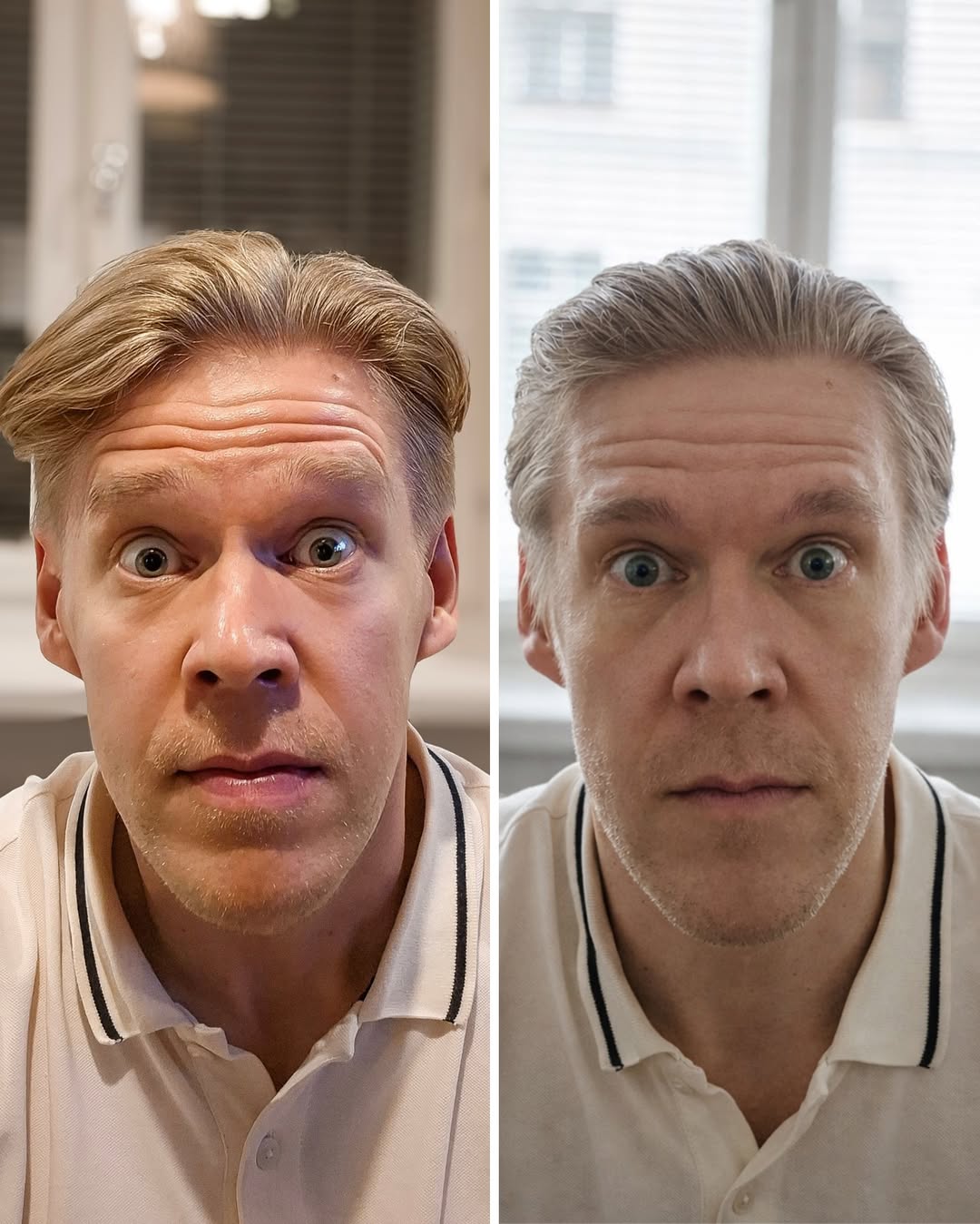
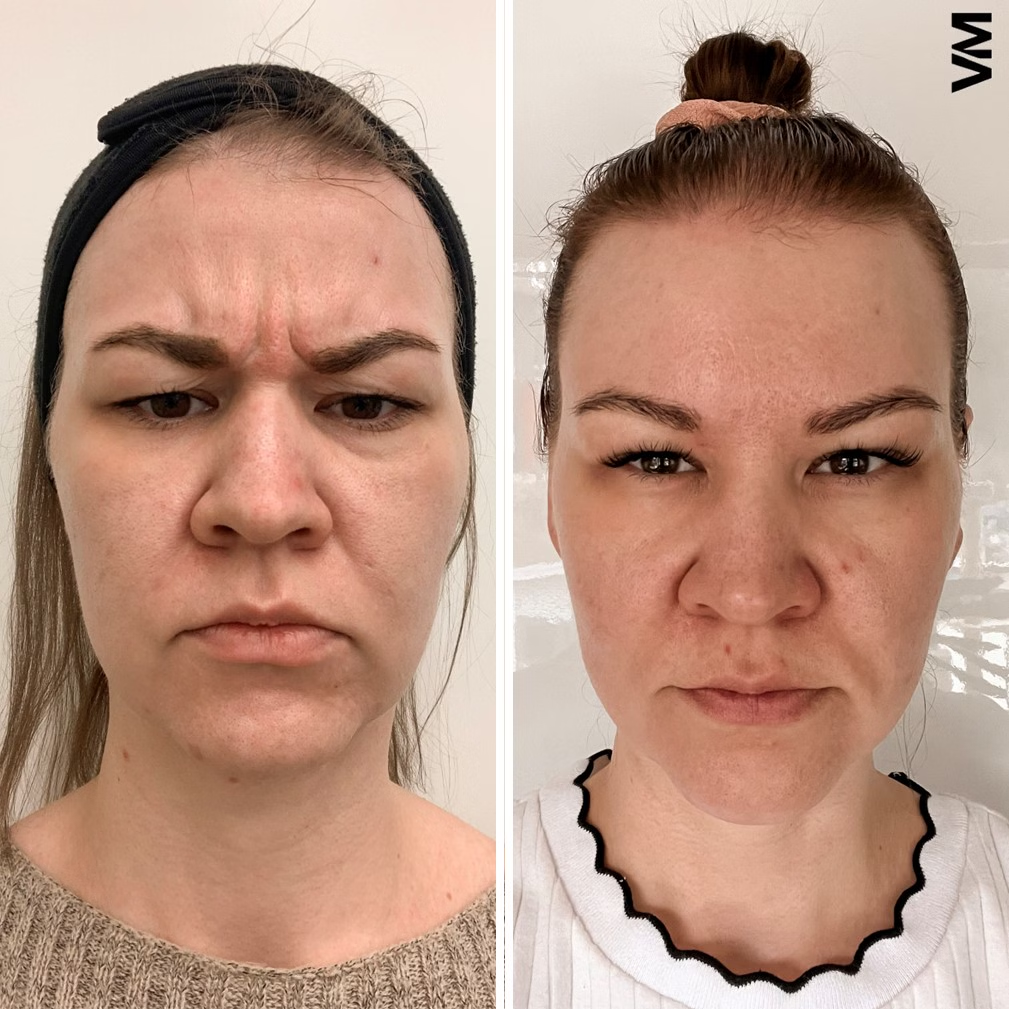
The best Botox treatment produces a noticeable change without making your face look unnatural. Wrinkles are visibly reduced, but your facial features remain natural. In the before-and-after photos below, you can see examples of the results of Botox treatment in different areas of the face.
You can find more examples on the Botox before and after page.

Ville is simply the best.
(NPS feedback, Helsinki, January 23, 2026)
The before-and-after photos were taken with so-called "extreme facial expressions"
(e.g., maximum frown, maximum eyebrow raise)




98,7% would recommend Ville*
* Patients who responded to customer satisfaction surveys in 2025.
“Definitely the best and friendliest Ville—highly recommended!” (NPS feedback from Helsinki, January 23, 2026)
“The service and treatment results are always top notch.” (Customer feedback, Helsinki, December 2, 2025)
“Ville is a reliable professional and really nice.” (NPS feedback in Helsinki, November 26, 2025)
Many of my clients tell me they were looking for the best Botox treatment in Helsinki and ended up at my clinic because the treatment is planned carefully and with respect for their facial features. My goal is a result that subtly refreshes the appearance while preserving the face’s natural expressiveness.
Many customers describe their visits as clear and unhurried. They particularly appreciate the fact that we go through the treatment options and goals thoroughly before the procedure.
Ville is the best! (NPS feedback, January 20, 2026, Helsinki)
Always friendly and knowledgeable service. I highly recommend them 🙂 (NPS feedback 23.9.2025, Helsinki)
The most brilliant and friendly service in the world! An excellent experience overall. (NPS feedback 6.11.2025)
Villellä has time for customers, and you don't get the feeling that work is done on an assembly line basis. (NPS feedback 2.9.2025, Helsinki)
Extremely friendly, professional, and really good service and care. I will definitely be back. (NPS feedback 19.10.2025)
Thank you, Ville, for patiently answering my questions. I am eagerly awaiting the results of the treatment! (NPS feedback 10/18/2025)
Really knowledgeable, professional, and friendly service. Ville is the best in his field, and I wouldn't go anywhere else. Every time, the result is top notch! (NPS feedback 9.9.2025)

Botox treatments target the facial muscles that cause wrinkles as a result of repeated muscle contractions. Horizontal forehead wrinkles are associated with the frontalis muscle, while frown lines between the eyebrows are mainly caused by the activation of the corrugator supercilii and procerus muscles.
More detailed guides:
Botox for the forehead and
Botox for crow's feet.
Botox is a prescription medication whose active ingredient is type A botulinum toxin. It is used in medically justified aesthetic treatments to relax the muscles that cause wrinkles or pull facial features downward.
As a result of botulinum treatment
Botox does not fill wrinkles or increase tissue volume. Its effect is based on regulating muscle activity. The end result of a well-planned and well-executed treatment is visible yet natural.
Botulinum toxin acts at the neuromuscular junction. Normally, the nerve ending releases a neurotransmitter called acetylcholine, which causes the muscle cell to contract. When botulinum toxin blocks the release of acetylcholine from the nerve ending, the muscle does not receive the contraction signal as strongly.
As a result, muscle activity is temporarily reduced. The muscle does not become completely paralyzed, but its activity is reduced in a controlled manner for a few months. When the muscle contracts less, the skin above it wrinkles less than usual. This also causes expression lines to become shallower and fade away.

The effect of botulinum toxin is based on neurotransmitters in the neuromuscular junction. When the release of acetylcholine is blocked, muscle cells do not receive the normal contraction signal. This temporarily reduces muscle activity and explains why Botox treatment can smooth out expression lines such as forehead wrinkles, frown lines, and crow's feet.
Botox, or botulinum toxin treatment, is suitable for people whose facial expression lines are caused by repeated muscle contractions. Typical treatment areas include horizontal forehead lines, the glabellar lines between the eyebrows, and crow’s feet.
The goal of the treatment is not to change facial expressions but to reduce excessive muscle activity, which results in less wrinkling of the skin and a more relaxed appearance.
Botulinum toxin acts at the neuromuscular junction by temporarily preventing muscle contraction. If wrinkles are primarily caused by structural changes in the skin (such as thinning of the skin or weakening of the connective tissue), botulinum toxin alone may not be sufficient treatment.
For this reason, the suitability of treatment is always assessed on an individual basis during the consultation.
It is important to consult a doctor or other Botox specialist
Botox treatment is always tailored to the anatomy and muscle function of the face. Even the same wrinkle can have different causes in different people. This influences the choice of treatment and the final result.
Botox treatment can target several muscles in the face and neck.
The treatment plan is always based on a comprehensive assessment of the face, rather than on treating a single wrinkle.
The goal is to achieve a harmonious and naturally relaxed facial appearance, along with a youthful-looking neck. This is achieved by balancing muscle activity in the face and neck: the muscles that pull the features downward and cause wrinkles are relaxed, while the muscles that lift the features are left untouched. This restores youthfulness and freshness without making the expression look unnatural or unnatural.
Botox treatment for the forehead reduces contraction of the forehead muscles. As the muscles relax, the skin wrinkles less and fine lines may become less noticeable. The goal of the treatment is to smooth the forehead while maintaining a natural expression.

In forehead Botox treatment, the injection sites are planned according to the anatomy of the frontalis muscle. This muscle is responsible for raising the eyebrows and forming horizontal wrinkles on the forehead. When the activity of the muscle is reduced in a controlled manner, the forehead lines are smoothed out and the facial expression becomes more relaxed.
Read our detailed guide to Botox treatments for the forehead.
Horizontal lines on the forehead are caused by repeated activation of the forehead muscles, for example when raising the eyebrows. On young skin, these lines are mainly visible when facial expressions are made, but over time, lines and wrinkles begin to appear even when the face is at rest. Many women notice their first permanent expression lines around the age of 30–40, when hormonal changes begin to affect the entire body—including the skin.
Botox treatment gently reduces the activity of the forehead muscles.
When the muscle contracts less than usual, the skin overlying the muscle wrinkles less. As a result, fine lines disappear completely, and even deep wrinkles are significantly reduced.
When performing Botox treatments on the forehead, I always take into account
For more information on Botox treatment for the forehead, see the guide:
Botox for the forehead – a surgeon's guide.

Botox treatment reduces the activity of the forehead muscles in a controlled manner. When the contraction of the frontalis muscle decreases, the forehead lines become shallower and the skin appears smoother.
Excessive relaxation of the forehead muscles can cause the eyebrows to droop, which is why the dosage must always be tailored to the individual. Read more about drooping eyebrows.
Sibelius lines are treated with botulinum toxin by relaxing the muscle between the eyebrows. As the muscle’s contractile force decreases, the vertical crease may soften and the expression appear more relaxed. The treatment typically targets the corrugator supercilii and procerus muscles.
Sibelius wrinkles, or the crease between the eyebrows, form when the muscles in the glabella area are repeatedly activated, for example when concentrating or squinting. Repeated frowning can create a tense, worried, or even angry expression on the face.
Botox can reduce the contraction of these muscles, thereby
When treating a Sibelius wrinkle, the goal is not a lack of expression but a natural change.
Price of Botox treatment for a Sibelius wrinkle: €289

Sibelius wrinkles form between the eyebrows when the corrugator and procerus muscles pull the eyebrows together. Botox treatment reduces the activity of these muscles in a controlled manner, flattening the vertical line between the eyebrows and making the expression appear more relaxed.

Sibelius wrinkles form between the eyebrows when the corrugator supercilii and procerus muscles pull the eyebrows together. Botox treatment reduces the activity of these muscles in a controlled manner, flattening the vertical line between the eyebrows and making the facial expression more relaxed.
Botox around the eyes reduces laugh lines by relaxing the muscles at the outer corners of the eyes. As muscle movement decreases, skin wrinkling is reduced and lines are smoothed out. The goal of the treatment is to preserve facial expressiveness while reducing the appearance of wrinkles.
The crow's feet that form at the outer corners of the eyes are caused by the activation of the orbicularis oculi muscle when smiling and squinting.
Botox treatment can reduce muscle activity so that
In the botulinum treatments I perform in Helsinki, the dosage is planned conservatively so that movement around the eyes is not restricted too much.
The orbicularis oculi muscle pulls the outer corner of the eye into a wrinkle, causing crow's feet to form. If the outer corners of the eyes are left untreated but the forehead is treated, for example, this can result in wrinkles forming above the corners, which are visible when the corners are raised. In the worst case, leaving the corners of the eyes untreated can also cause the corners to droop." (Surgeon Ville Männistö)

A lip flip is a botulinum toxin treatment that reduces the activity of the muscles around the upper lip. This can cause the edge of the lip to turn slightly outward, making the upper lip appear more prominent. The treatment does not increase lip volume; rather, it affects muscle function.
Botox does not fill the lips, but rather
The effect of Botox on the lips is moderate and individual. The first lip flip treatment often serves as a trial treatment, based on which the patient's individual response to treatment is assessed.
“In practice, the first lip flip is always a trial treatment to test the patient's individual response to treatment.”

In lip flip treatment, botulinum toxin is injected into the orbicularis oris muscle surrounding the upper lip. When the muscle tension is slightly reduced, the red part of the upper lip turns slightly outward and the lips appear fuller without fillers.
Read more about the treatment in the Botox Lips guide.
Activity in the DAO muscles, which pull the corners of the mouth downward, can accentuate a gloomy, tired-looking, or tense expression. When the activity of these muscles is reduced through Botox treatment, the position of the corners of the mouth may subtly shift upward.
The goal of botulinum toxin treatment in this area is usually
The treatment works by weakening the action of the DAO muscles, which pull the corners of the mouth downward. This can alter the muscle balance in the lower part of the face, making the corners of the mouth appear more lifted than before.
“When planning treatment, I always take into account the muscle balance of the entire lower face area.”
Botox injections into the masseter muscles reduce excessive activity in the chewing muscles, which is often associated with bruxism, or teeth grinding. As the muscle’s contractile force weakens, bite force may decrease, symptoms of bruxism may be alleviated, and the face may appear slimmer.
The masseter muscles are located at the corners of the mouth. They are the strongest chewing muscles in the face and, together with the temporalis muscles located at the temples, account for a large part of the biting force. In some people, the masseter muscles are naturally very strong, but the muscle can also grow as a result of, for example, bruxism, or teeth grinding.
Masseter Botox refers to botulinum toxin treatment of the chewing muscles. When botulinum toxin is injected into the masseter muscles, muscle activity decreases and chewing strength weakens slightly. The treatment does not prevent normal eating or speaking, but it can reduce muscle overload and tension.
Botox injections into the chewing muscles can help with the following problems, for example:
As the activity of the masseter muscles decreases, the muscle may shrink slightly over time. For this reason, masseter Botox can make the jawline softer and the lower face moderately narrower. Aesthetic facial narrowing occurs gradually as muscle mass decreases over the weeks following treatment.

The masseter muscle is one of the strongest muscles in the face and is involved in closing the teeth together. If the muscle is highly developed—for example, as a result of bruxism, or teeth grinding —it can make the lower part of the face appear wider.
Botox treatment reduces the activity of the masticatory muscles in a controlled manner, which can reduce muscle tension and at the same time narrow the lower part of the face naturally.
Read more in the guide to botulinum toxin treatment for bruxism...
Bruxism, or teeth grinding, is a condition of excessive tension in the masticatory muscles that can cause pain, headaches, fatigue, and tooth wear, even chipping. The symptoms often occur at night, but in many patients, unconscious jaw clenching during the day also puts constant strain on the masticatory muscles.
I use botulinum toxin treatment for bruxism when excessive tension in the masticatory muscles causes clear symptoms and a bite splint or other conservative treatment alone is not sufficient.
“The effects of Botox treatment for bruxism usually last for 3–6 months. If the treatment response is good, the procedure can be repeated up to three times a year.”
(Oral and maxillofacial surgeon Ville Männistö)
When treating bruxism, botulinum toxin is injected precisely into all the masticatory muscles and sometimes also into the neck and shoulder area. The drug inhibits the action of acetylcholine released from the nerve endings, thereby weakening the contraction force of the masticatory muscles in a controlled manner.
As a result of botulinum treatment
The treatment does not paralyze the chewing muscles, but the chewing force of the muscles is significantly reduced. Chewing and normal daily activities can be performed without any problems after the treatment.
Botox may be the best option if
The suitability of treatment is always assessed individually in a clinical examination. Not all jaw pain is caused by bruxism, which is why an accurate diagnosis is important before botulinum toxin treatment.
The effect typically begins within a few days and intensifies over the following two weeks of treatment.
Most patients experience
Any aesthetic changes, i.e., a moderate narrowing of the lower part of the face, usually develop more slowly than the health effects. The narrowing becomes apparent gradually as the masseter muscle mass decreases.

Bruxism, or teeth grinding, puts strain on the masticatory muscles, particularly the masseter muscle. Botox treatment reduces the activity of the masticatory muscles in a controlled manner, which can relieve jaw tension and reduce symptoms associated with teeth grinding.
Read our detailed guide on bruxism and Botox.
Botulinum toxin treatment can be used to treat chronic migraine when headaches are recurrent and significantly interfere with daily life.
When treating migraines with Botox, the aim is to prevent the release of compounds associated with pain. When these compounds are not released, headaches are reduced and the associated symptoms of migraines are alleviated. The central nervous system, which has become sensitive to pain, can also calm down.
Botox treatment for migraines is tailored to each individual based on their specific symptoms.
Botox treatment may be considered when
The suitability of treatment is always assessed before the procedure.
“Not all headache patients benefit from botulinum toxin treatment, and it is wise to approach the first Botox treatment as a trial treatment to test the individual response to treatment.”
Botox treatment for migraine involves treating several muscle groups in the head and neck area according to a precisely defined injection protocol. The treatment takes between ten and twenty minutes. After the treatment, the patient can return to their normal daily routine.
The effect begins gradually and is typically assessed after approximately two weeks.
Many patients experience
The effects of Botox treatment usually last for about three months, after which the treatment can be repeated based on an individual assessment.
Botox treatment for migraine is a medical procedure that is carried out using prescription medication. The treatment plan is based on a careful assessment and safe dosage. If you would like to find out whether botulinum toxin treatment could be a suitable option for you to manage your migraine, you can start by booking a free consultation.
Botox treatment is a quick procedure, but it must be carefully planned. Every treatment begins with a relaxed assessment and consultation. I always tailor the treatment to the client’s wishes.
Before the injections, I will go through everything with you.
I assess the muscle activity in your face both at rest and when you are making facial expressions. Botulinum toxin treatment must be planned individually, not according to a ready-made formula.
The procedure usually takes 5–15 minutes, depending on the number of areas being treated.
Most people compare the pain associated with injections to insect bites. It is not necessary to numb the skin, but if the patient is very sensitive to pain, a topical anesthetic may be considered.
You can return to your normal routine immediately after treatment.
You will receive clear aftercare instructions:
The effect begins to show within a few days and stabilizes within about two weeks.
What happens after treatment?
If you're wondering what you can and can't do after Botox injections, read the updated guidelines based on the latest research findings here: After Botox injections.
The price of the Botox treatment includes a follow-up visit 2–4 weeks later.
The control assesses
During the follow-up visit, I will add botulinum toxin to the treated areas if necessary, at no extra charge.
A Botox treatment at my clinic typically takes 20–30 minutes. A thorough consultation and treatment planning take up most of that time; the injections themselves take only a few minutes.

The effect of botulinum toxin does not begin immediately after the injection. Most patients notice the first changes within 2–4 days, when muscle activity begins to decrease. The full effect is usually achieved after about two weeks.
Read the detailed guide at
about the duration of Botox's effects.

The duration of Botox's effect depends on the muscle being treated and individual factors. In the facial muscles, the effect typically lasts a few months, while in larger muscles such as the jaw muscles, the effect may last longer.
For more information, see the guide
on the duration of the effects of Botox.
The duration of the effect varies from person to person. Factors affecting the duration include, for example
Regular treatment can prolong the effect over time in some patients. Typically, the results of the first Botox treatment wear off in three months, but with regular repeat treatments, the intervals between treatments can be extended to six months.
Botulinum toxin has been used in medicine for decades and in aesthetic treatments for over 20 years. When performed correctly, Botox treatment is a safe procedure with highly predictable results.
Safety is based on three factors:
At my clinic in Helsinki, I assess the overall muscle balance of each patient's face before treatment. This avoids unbalanced results and minimizes risks.
The effects of Botox are always temporary, which increases the controllability and safety of the treatment. A follow-up visit is included in the total price of the procedure, and during the follow-up visit, I can adjust the treatment results if necessary. If necessary, the treatment plan can be further modified during subsequent visits.
Botox treatment is a safe procedure when performed by a professional. If you would like to learn more about the possible risks and most common reactions, you can read a more detailed article here:
botox side effects.
Botulinum toxin treatment is a medical procedure, and like all injection treatments, it carries potential side effects. However, when properly planned and performed, Botox treatment is generally well tolerated.
We always discuss any potential risks before treatment. The treatment is safe, but of course it is not entirely risk-free.
Most side effects are mild and temporary. These may include
These side effects usually disappear within a few days.
Botulinum toxin acts locally at the neuromuscular junction.
In some situations—especially if the drug spreads outside the treatment area—the following may occur
These effects are usually temporary and resolve over time. Precise injection technique and correct dosage significantly reduce the risk of these effects.
Botox treatment is not performed
Any illnesses and medications are always reviewed before treatment.
Safety is based on three factors:
This page provides a concise overview of side effects.
A more comprehensive and detailed safety guide can be found here:
Botox side effects – a surgeon's safety guide
The training and work experience of an oral and maxillofacial surgeon means they have a deep understanding of the nerve and muscle structures of the face. This medical understanding is essential for performing botulinum toxin treatments effectively and safely.
Below you can see botulinum toxin treatments performed by surgeon Ville Männistö and his clinical observations from Instagram (@ville.aesthetic). This is his professional channel, which showcases aesthetic medicine treatments from his clinical practice in Helsinki and Tampere.
✨ Botox Experiences: Why Does the Practitioner Matter? ✨
Botox treatment is a quick, safe, and effective procedure. However, the results and how long they last always depend on the practitioner.
Professional Botox Treatment:
▪️The results are natural-looking, beautiful, and long-lasting.
▪️The procedure is safe.
💬 Experiences from Ville’s clients:
“The end result has been excellent every time.”
“I don’t want to go anywhere else anymore.”
“You can trust his hands 100%.”
An experienced practitioner understands the client’s wishes and facial anatomy. They know how to administer botulinum toxin correctly so that the results remain naturally beautiful for as long as possible.
Botulinum toxin treatment isn’t just about correcting wrinkles; it can also help prevent signs of aging. That’s why it’s important to get the treatment done right from the very beginning.
⭐ 5 / 5
Ville’s Google reviews (21 reviews)
If you’re considering Botox treatment, choose a practitioner you can truly trust. The practitioner’s expertise is directly reflected in the final result and its longevity.
#botox #botoxtreatments #aestheticbotox

Botox Training in Spring 2026
What?
Aesthetic Botox treatments for the upper face / Botox treatments for migraines, bruxism, and excessive sweating
Where?
In Kalasatama, Helsinki, at the Ebeling Dentists’ Auditorium
When?
- Sat, May 16
- Sat, June 6
Prices:
- Aesthetic botulinum treatments €990 (VAT 0)
- Aesthetic and medical botulinum treatments €1,490 (VAT 0)
Payment:
- Invoice/e-invoice
- The online store also accepts credit cards, online banking, and mobile payments, as well as Klarna and Walley installment plans
Additional information:
- koulutus@villemannisto.fi
- 044 901 3411
- villemannisto.fi/botox-koulutus
#botoxtraining #botulinumtraining #villemannistö
Botox for the forehead and frown lines 📸
The facial muscles have two main roles. And this is where my work really begins. 👇
💡 𝗙𝗮𝗸𝘁𝗮 𝟭
Some muscles lift the features (elevators), while others pull them down (depressors). When I relax carefully selected downward-pulling muscles with Botox, the upward-lifting muscles are able to work more effectively. The result: a lighter, more open, lifted expression, without adding anything to the features.
💡 𝗙𝗮𝗸𝘁𝗮 𝟮
This principle is clearly visible in the upper face. For example, heavy eyelids can become lighter and the gaze can open up when the downward-pulling muscles are relaxed. It’s not just about smoothing out wrinkles, but about balancing the overall look.
💡 𝗙𝗮𝗸𝘁𝗮 𝟯
Your face is unique. That’s why I design your Botox treatment individually. The right injection sites, the right dosage, the right technique—these are what make all the difference.
📸 The magic of Botox in the photos.
Free consultation, links in bio.
#botox #beforeandafterphotos #villemännistö
Botox Helsinki: forehead, glabellar lines, crow’s feet 📸
⏱️ 𝐁𝐨𝐭𝐨𝐱 & the 4-hour rule
Right after a Botox treatment, I always give the same instruction: 👇
“Stay upright for 4 hours.”
But let’s dig a little deeper:
💡 𝐅𝐚𝐤𝐭𝐚 𝟏: Botulinum toxin binds very quickly… but not quite in seconds. According to some semi-scientific sources, the first few hours are the most critical.
💡 𝐅𝐚𝐤𝐭𝐚 𝟐: Strong scientific evidence does NOT show that 4 hours is an absolute threshold.
💡 𝐅𝐚𝐤𝐭𝐚 𝟑: Still, it’s worth following the 4-hour rule. Why play it safe? Because in aesthetic treatments, we aim for perfection, not just “good enough.”
4 hours after Botox treatment:
👉 No lying down
👉 No sauna or swimming
👉 No pressure on the treatment area
The 4-hour rule minimizes even minor risks and ensures that the final result is precise, symmetrical, and natural.
—
❗ You don’t need to Google it. I’ll go over the aftercare instructions with you during your appointment.
📩 If you’re considering Botox, let’s start with a free consultation – Helsinki, Tikkurila, Tampere, Pori, Forssa.
Links in bio, more info via DM.
#beforeandafter
#botulinumtoxintreatments
Botox on the forehead 📸
𝐁𝐨𝐭𝐨𝐱 𝐨𝐧 𝐮𝐮𝐬𝐢 𝐡𝐨𝐢𝐭𝐨, 𝐞𝐢𝐤𝐚̈ 𝐤𝐮𝐤𝐚𝐚𝐧 𝐭𝐢𝐞𝐝𝐚̈ 𝐬𝐞𝐧 𝐩𝐢𝐭𝐤𝐚̈𝐚𝐢𝐤𝐚𝐢𝐬𝐯𝐚𝐢𝐤𝐮𝐭𝐮𝐤𝐬𝐢𝐚?
The classic. This claim comes up regularly when Botox is discussed.
𝐅𝐚𝐤𝐭𝐚𝐚, 𝐤𝐢𝐢𝐭𝐨𝐬! 👇
Botulinum toxin has been studied and used in medicine for over 40 years. It was originally used to treat medical conditions, such as eye muscle disorders and muscle spasms. Botox came into aesthetic use a little later.
A little historical trivia: botulinum toxin was originally discovered in the 1800s when researchers were investigating cases of food poisoning caused by spoiled sausage. In fact, the Latin word botulus means sausage.
Decades of research data on botulinum toxin, or “Botox,” have been accumulated. Currently, botulinum toxin is one of the most extensively studied medications in medicine.
When the treatment is performed using the correct technique and proper dosages, the procedure’s safety profile is extremely robust.
📸 Photos:
After two weeks, the lines have smoothed out. The facial expression remains unique and personal. This is the look I aim for (unless the client specifically requests something else 😁): freshness, naturalness, elegance.
❗ Free consultation: Helsinki, Tikkurila, Tampere, Pori
Book an appointment via the link in my profile
@ville.aesthetic
#botoxhelsinki #botulinumtoxintreatment #beforeandafter #aesthetictreatments #botoxfinland
Botox for the forehead, before and after
What is a photo consultation?
A photo consultation is an easy way to get an expert’s assessment without having to come in for an appointment.
A photo consultation is
• free of charge
• non-binding; sending a photo consultation message does not obligate you to book an appointment or purchase anything
• an easy way to get a preliminary assessment of your situation and the cost of treatment
Based on the photos, I can assess your initial condition, suggest possible treatment options, and let you know if you should come in for a more detailed examination. A photo consultation is particularly useful, for example, if my office is a long way away or if you can’t find a suitable slot in my appointment calendar.
Photo consultation vs. in-person consultation
Photo consultation
– preliminary assessment based on photos
– a low-threshold way to ask for my opinion
– does not require booking an appointment
In-person consultation
– a more detailed examination of the face and tissues
– enables a precise treatment plan
– treatment can be performed during the same visit, if you wish
– costs nothing and does not obligate you to anything
👉 In simple terms:
photo consultation = preliminary assessment
in-person consultation = detailed examination
I treat all photo consultation messages confidentially, and photos sent for consultation are deleted from the system once the conversation is over.
#botox #botoxbeforeandafter #beforeandafter
Botox Helsinki it is!
When visualization and facial yoga just aren’t enough anymore… let Botox charm you (and hook you 😘)!
𝟯 × 𝗳𝗮𝗸𝘁𝗮 𝗯𝗼𝘁𝗼𝘅𝗶𝗻 𝗵𝗶𝘀𝘁𝗼𝗿𝗶𝗮𝘀𝘁𝗮: 👇
1️⃣ Research into botulinum toxin in medicine began as early as the mid-20th century, and in the 1970s, ophthalmologists used it to treat eye muscle disorders (e.g., strabismus).
2️⃣ In 1989, botulinum toxin received its first official medical approval in the United States.
3️⃣ During treatments, doctors noticed something interesting: the wrinkle between the eyebrows smoothed out at the same time. This “side effect” gave rise to an entirely new use.
And this marked the beginning of Botox’s history in aesthetics.
Today, botulinum toxin is one of the most extensively studied pharmaceuticals in the world. It is used millions of times a year for both medical and aesthetic treatments.
📸 The photos show a classic Botox treatment for the upper face.
The lines were clearly softened, but her natural expression remained. This is the look I aim for in my treatments.
❗️Free consultation:
Helsinki, Tikkurila, Tampere, Pori
Book an appointment via the link in my profile
@ville.aesthetic
💬
“Ville is someone you can trust. I’ve been to many, but Ville is the first who truly knows his stuff. At the clinic, you feel like you’re in the hands of a professional—and on top of that, he’s really nice.”
#botoxhelsinki #botulinumtoxintreatment #aesthetictreatments #beforeandafter #botoxfinland
Baby Botox prevents signs of aging.
𝗕𝗼𝘁𝗼𝘅 𝘃𝘀. 𝗗𝘆𝘀𝗽𝗼𝗿𝘁 𝘃𝘀. 𝗫𝗲𝗼𝗺𝗶𝗻 - let’s debunk a few myths 💉
⛔ Myth 1: One brand is clearly better than the others.
💚 Truth: All botulinum toxin products used in Finland are excellent.
As a healthcare professional, I’m not even allowed to advertise a single brand of medication, so when I say “Botox treatment,” I mean all treatments performed with botulinum toxin products.
⛔ Myth 2: “I was given 60 units of Dysport, but my friend only got 20 units of Botox. What’s the deal—which one of us got ripped off?”
🛑 Stop.
💚 Truth:
Comparing units requires a little math.
👉 1 unit of Botox or 1 unit of Xeomin ≈ 2.5 units of Dysport.
In other words:
20 units of Botox/Xeomin ≈ 50–60 units of Dysport.
A higher number does not mean greater potency. Botox and Dysport are “different currencies.” 💶💵
⛔ Myth 3: The same product works equally well for everyone, every time.
💚 Truth: Treatment response is individual.
One product works better for one person, another for another. If you get the best results with a specific brand of Botox, let me know!
And yes—in my experience, it can be the case that in your 30s, you get the optimal response from one product, and in your 50s, from another.
The body changes. Muscles change. The skin changes.
The brand doesn’t determine the outcome.
Understanding anatomy does.
On social media, people compare numbers.
At the clinic, we analyze anatomy and muscle activity.
P.S. Sometimes a very tight and deep glabellar line requires a small amount of filler in addition to Botox. However, the forehead is a high-risk area for filler treatments. ➡️ Choose your practitioner with particular care. 💉✨
#botoxhelsinki #botulinumtoxintreatment #beforeandafter
Botox on the forehead: before–after. 💉
Botox in three areas in these (too 😄) photos:
▪ glabellar lines
▪ horizontal forehead lines
▪ crow’s feet
The goal isn’t to look expressionless. The goal is controlled relaxation. The face looks refreshed, the skin smooths out, and the eyes open up. Yet the expression remains natural and uniquely your own.
A few observations on Botox trends from the start of the year:
▪ Natural movement is key. A perfectly frozen forehead is no longer the ideal for all my clients.
▪ Smaller, more precisely targeted doses. Understanding muscle function is at least as important as the number of units.
▪ For many, Botox is part of a broader beauty plan, not a single quick fix.
At its best, Botox turns the clock back at least five years.
Have a sunny weekend!
– Ville
#botoxhelsinki #beforeandafter #botulinumtoxintreatments
✨ 𝐁𝐞𝐟𝐨𝐫𝐞 & 𝐚𝐟𝐭𝐞𝐫 𝐁𝐨𝐭𝐨𝐱 ✨
Here is the natural transformation of one of my Botox training models.
The lines faded, but the expression remained natural and true to her own look. This is exactly the kind of treatment result I like.
The next Botox model search starts next week.
‼️ 𝐊𝐨𝐧𝐭𝐫𝐨𝐥𝐥𝐢 𝐤𝐮𝐮𝐥𝐮𝐮 𝐡𝐢𝐧𝐭𝐚𝐚𝐧.
Botox clients receive a follow-up visit at no extra cost, during which I personally assess the final result and make any necessary touch-ups at no additional charge. The treatment price therefore covers the procedure, the follow-up, and any finishing injections.
In practice, you get a carefully refined final result at the model price.
💡 Fun fact: Botox was originally developed to treat eye muscles. Its aesthetic effects were only discovered later.
#botox #beforeandafter #botoxmodel #aesthetictreatments #villemännistö
Botox for the forehead, Helsinki… once again! 😄
90% 𝗵𝗼𝗶𝗱𝗼𝗶𝘀𝘁𝗮 𝘀𝘁𝗮𝗿𝘁𝘁𝗮𝗮 𝗯𝗼𝘁𝗼𝘅𝗶𝗹𝗹𝗮. 💉
Many people come to my office asking:
“Do I need a chemical peel?”
“Would laser be the best solution?”
“Or maybe five milliliters of filler?”
The honest answer?
Very often, Botox is enough.
When muscle activity is calmed in a controlled manner, the face looks refreshed, the skin smooths out, and the overall appearance brightens. Classic botulinum toxin treatment in three areas makes a surprisingly big difference. That’s why it’s worth playing the Botox card before opting for large and expensive treatment combinations.
I don’t design a treatment plan to maximize the number of your treatments.
I design a treatment plan to maximize your final results.
Let’s start off gently, shall we? And we’ll add new elements to the treatment combination later if there are sound aesthetic and medical reasons to do so.
Also remember: the final results of Botox aren’t fully visible until about 2–4 weeks in. 𝑬𝒂𝒔𝒚 𝒅𝒐𝒆𝒔 𝒊𝒕!
If you’re considering aesthetic treatments, send me photos for evaluation. Let’s figure out together what makes the most sense for your face.
Photo consultation form behind the links in my bio:
@ville.aesthetic
#botoxhelsinki #botulinumtoxintreatments #beforeandafter
Sibelius lines and forehead vs. Botox 📸
The trend in Botox is clear. 👀✨
New research data presented at the IMCAS 2026 congress in Paris confirms what I see in my practice every week:
👉 less is more
👉 naturalness beats stiffness
👉 individuality is at the heart of it all
Current trends lean toward
▫️ micro-dosing & baby Botox
▫️ preserving the face’s natural movement
▫️ preventive treatments for people in their 20s and 30s
▫️ combining Botox with treatments that improve skin quality
Botox is no longer just about “wrinkle removal.” It’s part of a comprehensive, long-term treatment plan.
When done well, the result looks rested, fresh, and like you.
📷 Pictured here:
A refreshed face. Your own unique expression. Naturalness.
👀 If you’re wondering what role Botox could play on your face (or if it has a role at all), a free photo consultation is a great place to start.
Access the photo consultation form via the link in my bio, @ville.aesthetic
#botox2026 #botoxhelsinki #imcas2026
Botox, or botulinum toxin treatment, is an injection procedure in which type A
botulinum toxin is injected into a muscle. The treatment is used to reduce expression lines and for certain
medical conditions, such as bruxism, migraines, and excessive sweating.
The outcome of treatment is always temporary.
Botox reduces muscle activity in the treated area.
When the muscle relaxes,
The effect usually lasts for 3–6 months.
For most people, the effects of Botox treatment last 3–6 months.
The effects usually begin within a few days, and the final results are visible after about
1–2 weeks.
The treatment usually feels like small pricks or pinches. The discomfort is minimal and lasts only a moment.
Yes. The natural-looking results depend on the dosage and treatment plan.
The goal is often to preserve facial expressions, not to eliminate them.
Botox treatments may be administered by doctors and dentists. Trained
nurses may also administer treatments under a doctor’s supervision at a healthcare facility.
Yes. Botulinum toxin is a neurotoxin, but in medicine it is used in very small doses. When used correctly, it is a safe and effective medication.
The most common side effects are
Risks are often related to injection technique and dosing.
After Botox treatment, it is recommended that
The cost of Botox treatment depends on the number of areas being treated.
The exact price will be determined at the appointment based on the treatment plan.
Botox and Dysport are different medications, but both contain
botulinum toxin. The effects are similar, but individual differences
in response may occur.
Cosmetic Botox treatments are not covered by Kela.
Reimbursement may be available for medical treatments if the treatment is based on
a doctor’s diagnosis and prescription.
Botox isn't for everyone.
Contraindications include, for example
Eligibility is always assessed during the consultation.
Botox is most commonly used
In addition, it can be used, for example, to treat migraines, bruxism, and
excessive sweating.
Treatment is usually repeated every 3 to 6 months to maintain its effectiveness.
Yes, you can. Botox treatment usually doesn't require any recovery time.
This is possible if the dosage or injection site is not optimal. For this reason,
treatment is carefully planned and a follow-up visit is scheduled if necessary.
Botox is suitable for adults who want to reduce expression lines
or prevent them from deepening.
Yes. Botox treatments are also available in Helsinki. The treatment location is arranged at
when booking an appointment, and appointments are available in Helsinki, among other locations.
If you are considering botulinum toxin treatment or would like to better understand its effects and uses, my website offers several guides on the subject. These guides cover topics such as pricing and aftercare for aesthetic procedures.
Botox treatment is a medical procedure whose outcome depends above all on an understanding of anatomy, precision in dosing, and a personalized treatment plan. At my practice, treatment is based on a clinical assessment, not on pre-determined injection charts.
There is a dense network of nerves and muscles in the facial area.
Safe and natural Botox treatment requires a thorough understanding of:
Training as an oral and maxillofacial surgeon provides a solid foundation for assessing these structures and performing safe injection techniques.
Botox treatment is not performed "area by area" separately from the whole.
I always evaluate
The goal is not maximum muscle relaxation, but rather controlled and balanced change.
The success of aesthetic Botox treatment is not measured by how much the expression changes, but by how natural even a significant change appears.
The goal of treatment is to
Many patients want to look fresh and youthful without anyone noticing that they have undergone treatment.
Botulinum toxin can be used to treat both aesthetic and functional problems.
Clinical experience with both helps
I have been a member of a research group whose study on botulinum toxin treatment for masticatory muscles has been published in an international peer-reviewed scientific journal. The publication is indexed in the PubMed database.
The goal is for treatment decisions to be based on understanding, not haste.
The informational content of this Botox guide was compiled by oral and maxillofacial surgeon Ville Männistö. Over the course of his career , Ville has performed tens of thousands of Botox treatments:
“Botulinum toxin treatment is based on medical research evidence. As part of my doctoral research, I am participating in a study on botulinum toxin treatments for the masticatory muscles. The study results have been published in an international peer-reviewed scientific journal.”
Free consultations can also be done using photographs. You can send me a few photos of your face and a brief description of what concerns you about the treatment. I will assess your situation based on the photos and suggest suitable treatment options and their costs.
I review image consultations once a week, usually on Fridays. I will respond to you personally and tell you what treatment I would recommend and why. All images and messages are treated confidentially.
The image consultation is free of charge and does not commit you to treatment.

Would you like me to contact you? Do you need consultation assistance or a price estimate? Leave me a message using the form below, and I will contact you as soon as possible.
Kuvakonsultaatiolomake löytyy täältä!